


-
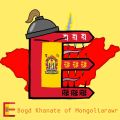 GOOD LORD WHAT IS THAT
 -
 sad Bogd
 -
 angry Bogd
 -
 horrified Bogd
 -
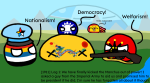 minor easteregg
 -

Bogd Khanate of Mongolia: Difference between revisions
From Heterodontosaurus Balls
| (9 intermediate revisions by 2 users not shown) | |||
| Line 1: | Line 1: | ||
{{Infobox | {{Infobox | ||
|Name = {{i|Bogd Khan}} Great Mongolian State {{i|Bogd Khan}} | |Name= {{i|Bogd Khan}} Great Mongolian State {{i|Bogd Khan}} | ||
|NativeName = {{ILSize|MongolianL-icon.png|Mongolian Language}}: ᠮᠣᠩᠭᠣᠯ ᠤᠯᠤᠰ | |NativeName= {{ILSize|MongolianL-icon.png|Mongolian Language}}: ᠮᠣᠩᠭᠣᠯ ᠤᠯᠤᠰ | ||
|founded = 1911 | |founded= 1911 | ||
|predicon = | |predicon= QingNew | ||
|ended= 1924 | |||
|ended = 1924 | |nexticon= MongolPR | ||
|nexticon = MongolPR | |onlysuccessor= Mongolian People's Republic | ||
|onlysuccessor = Mongolian People's Republic | |image= Bogd Khanate.png | ||
|image = Bogd Khanate.png | |Caption= | ||
|Caption = | |Alias= {{I|Bogd Khan}} Bogd Khanate<br>Bogd Khan<br>Bogd Khaan<br>Bogd Khaganate<br>State of Mongolia Elevated by the Many | ||
|Alias = {{I|Bogd Khan}} Bogd Khanate<br>Bogd Khan<br>Bogd Khaan<br>Bogd Khaganate<br>State of Mongolia Elevated by the Many | |Time= 29 December 1911 – 26 December 1924 | ||
|Time | |Government= {{i|Theocracy}} {{i|AbMon}} [[Theocracy|Theocratic]] [[Absolute Monarchism|Absolute Monarchy]] | ||
|Government = {{i|Theocracy}} {{i|AbMon}} [[Theocracy|Theocratic]] [[Absolute Monarchism|Absolute Monarchy]] | |Languages= {{i|MongolianL}} [[Mongolian Language|Mongolian]] | ||
|Languages = {{i|MongolianL}} [[Mongolian Language|Mongolian]] | |Affiliation= {{i|Beiyang}} [[Republic of China]] (de jure, only from 1919 to 1921) | ||
|Affiliation = {{i|Beiyang}} [[Republic of China]] (de jure, only from 1919 to 1921) | |Religions= | ||
|Religions = | |||
*{{i|Buddhism}} [[Buddhism]] | *{{i|Buddhism}} [[Buddhism]] | ||
**{{i|Vajrayana}} [[Vajrayāna]] | **{{i|Vajrayana}} [[Vajrayāna]] | ||
***{{i|TibetBudd}} [[Tibetan Buddhism]] | ***{{i|TibetBudd}} [[Tibetan Buddhism]] | ||
*{{i|Tengrism}} [[Tengrism]] | *{{i|Tengrism}} [[Tengrism]] | ||
|Friends = | |Friends= {{i|Tibet}} [[Tibet]]<br>{{i|Russian Republic}} [[Russian Republic]]<br>{{i|WhiteMove}} [[White Movement]] | ||
|Enemies = | |Enemies= {{i|QingNew}} [[Qing Dynasty]]<br>{{i|Beiyang}} [[Republic of China]]<br>{{i|RSFSRold}} [[Russian Soviet Federative Socialist Republic|Russian SFSR]]<br>{{i|MongolPR}} [[Mongolian People's Republic|Communist Mongolia]] | ||
|Likes = Being independent, {{i|Theocracy}} [[Theocracy|theocracy]], being religious | |Likes= Being independent, {{i|Theocracy}} [[Theocracy|theocracy]], being religious | ||
|Dislikes = {{i|Qing}}{{i|Beiyang}} [[China|Chinese]] {{i|Empire of China}} claiming him, {{i|Commie}} [[Communism|communists]] | |Dislikes= {{i|Qing}}{{i|Beiyang}} [[China|Chinese]] {{i|Empire of China}} claiming him, {{i|Commie}} [[Communism|communists]] | ||
|Preceded = {{AL | |Preceded= {{AL|'''1911:'''<br>{{i|QingNew}} [[Qing Dynasty]]<br>'''1921:'''<br>{{i|Beiyang}} [[Republic of China]]}} | ||
|Succeeded = {{AL | |Succeeded= {{AL|'''1919:'''<br>{{i|Beiyang}} [[Republic of China]]<br>'''1924:'''<br>{{i|MongolPR}} [[Mongolian People's Republic]]}} | ||
|Capital = {{i|Ulaanbaatar}} [[Ulaanbaatar|Niislel Khüree]] | |Capital= {{i|Ulaanbaatar}} [[Ulaanbaatar|Niislel Khüree]] | ||
|themecolor = #db1a2e | |themecolor= #db1a2e | ||
|textcolor = #ffda00 | |textcolor= #ffda00 | ||
}}{{Quote|I established our own state before you, {{i|Khan}} [[Mongolia|Mongols]] and {{i|China}} [[China|Chinese]] have different origins, our languages and scripts are different. You're not the {{i|Manchu}} [[Manchuria|Manchu]]'s descendants, so how can you think China is the Manchu's successor?|{{i|Bogd Khan}} [[Monarchism|Bogd Khaan]] to {{i|Yuan Shikai}} [[Yuan Shikai Thought|Yuan Shikai]]}}'''Bogd Khanate of Mongolia''' was the {{i|Theocracy}} [[Theocracy|theocratic]] regime in {{i|Mongolia}} [[Mongolia]] between declaring independence from {{i|Qing}} [[Qing Dynasty]] in the Mongolian Revolution of 1911 and the formation of the {{i|MongolPR}} [[Mongolian People's Republic]] in 1924. | }}{{Quote|I established our own state before you, {{i|Khan}} [[Mongolia|Mongols]] and {{i|China}} [[China|Chinese]] have different origins, our languages and scripts are different. You're not the {{i|Manchu}} [[Manchuria|Manchu]]'s descendants, so how can you think China is the Manchu's successor?|{{i|Bogd Khan}} [[Monarchism|Bogd Khaan]] to {{i|Yuan Shikai}} [[Yuan Shikai Thought|Yuan Shikai]]}}'''Bogd Khanate of Mongolia''' was the {{i|Theocracy}} [[Theocracy|theocratic]] regime in {{i|Mongolia}} [[Mongolia]] between declaring independence from {{i|Qing}} [[Qing Dynasty]] in the Mongolian Revolution of 1911 and the formation of the {{i|MongolPR}} [[Mongolian People's Republic]] in 1924. | ||
| Line 34: | Line 33: | ||
==History== | ==History== | ||
=== Founding === | ===Founding=== | ||
The Bogd Khanate was founded in 1911, following the collapse of the {{i|QingNew}} [[Qing Dynasty]] in China. Taking advantage of the political turmoil and weakening Chinese control, {{i|Mongolia}} [[Mongolia|Mongolian]] nobles, lamas, and the general populace declared independence from China. They invited the eighth {{i|Buddhism}} [[Buddhism|Jebtsundamba Khutuktu]], a high-ranking {{i|TibetBudd}} [[Tibetan Buddhism|Tibetan Buddhist]] lama, to become their spiritual and temporal leader. Consequently, the {{i|Bogd Khan}} [[Monarchism|Bogd Khan]] was enthroned as the ruler of the newly established theocratic state, marking the beginning of the Bogd Khanate of Mongolia. | The Bogd Khanate was founded in 1911, following the collapse of the {{i|QingNew}} [[Qing Dynasty]] in China. Taking advantage of the political turmoil and weakening Chinese control, {{i|Mongolia}} [[Mongolia|Mongolian]] nobles, lamas, and the general populace declared independence from China. They invited the eighth {{i|Buddhism}} [[Buddhism|Jebtsundamba Khutuktu]], a high-ranking {{i|TibetBudd}} [[Tibetan Buddhism|Tibetan Buddhist]] lama, to become their spiritual and temporal leader. Consequently, the {{i|Bogd Khan}} [[Monarchism|Bogd Khan]] was enthroned as the ruler of the newly established theocratic state, marking the beginning of the Bogd Khanate of Mongolia. | ||
=== Kyakhta Agreement of 1915 === | ===Kyakhta Agreement of 1915=== | ||
A tripartite conference between the {{i|Russian Empire}} [[Russian Empire]], {{i|Beiyang}} [[Republic of China]] and the {{i|Bogd Khan}} [[Monarchism|Bogd Khan]]'s government convened at {{i|Kyakhta}} [[Kyakhta]] in the autumn of 1914. | A tripartite conference between the {{i|Russian Empire}} [[Russian Empire]], {{i|Beiyang}} [[Republic of China]] and the {{i|Bogd Khan}} [[Monarchism|Bogd Khan]]'s government convened at {{i|Kyakhta}} [[Kyakhta]] in the autumn of 1914. | ||
| Line 48: | Line 47: | ||
The treaty did contain one significant feature which the Chinese were later to turn to their advantage; the right to appoint a high commissioner to {{i|Ulaanbaatar}} [[Ulaanbaatar|Urga]] (now known as Ulaanbaatar) and deputy high commissioners to {{i|Mongolia}} [[Uliastai]], {{i|Mongolia}} [[Khovd City]], and {{i|Kyakhta}} [[Kyakhta]]. This provided a senior political presence in Mongolia, which had been lacking. | The treaty did contain one significant feature which the Chinese were later to turn to their advantage; the right to appoint a high commissioner to {{i|Ulaanbaatar}} [[Ulaanbaatar|Urga]] (now known as Ulaanbaatar) and deputy high commissioners to {{i|Mongolia}} [[Uliastai]], {{i|Mongolia}} [[Khovd City]], and {{i|Kyakhta}} [[Kyakhta]]. This provided a senior political presence in Mongolia, which had been lacking. | ||
=== Decline of Russian Influence === | ===Decline of Russian Influence=== | ||
In 1913, the {{i|Russian Empire}} [[Russian Empire|Russian]] consulate in {{i|Ulaanbaatar}} [[Ulaanbaatar|Urga]] began publishing a journal titled Shine tol' (the New Mirror), aimed at promoting a positive image of Russia. Edited by {{i|Buryatia}} [[Buryatia|Buryat]]-born scholar and statesman {{i|Reformism}} [[Reformism|Ts. Zhamtsarano]], the journal became a platform for advocating political and social change. The first issue angered lamas by denying the world was {{i|Flat Earth}} [[Flat Earth Theory|flat]], and another issue sharply criticized the Mongolian nobility for exploiting ordinary people. Russian-sponsored reforms, including medical and veterinary services, faced resistance from the lamas, who viewed these areas as their domain. The Mongols were frustrated by Russian efforts to oversee the use of a second loan and to reform the state budgetary system, believing the first loan had been squandered. Appointed in 1913, Russian diplomat {{i|Imp}} [[Imperialism|Alexander Miller]] was poorly received due to his disdain for most Mongolian officials, whom he considered extremely incompetent. Meanwhile, the chief Russian military instructor successfully organized a Mongolian military brigade, which later fought against Chinese troops. | In 1913, the {{i|Russian Empire}} [[Russian Empire|Russian]] consulate in {{i|Ulaanbaatar}} [[Ulaanbaatar|Urga]] began publishing a journal titled Shine tol' (the New Mirror), aimed at promoting a positive image of Russia. Edited by {{i|Buryatia}} [[Buryatia|Buryat]]-born scholar and statesman {{i|Reformism}} [[Reformism|Ts. Zhamtsarano]], the journal became a platform for advocating political and social change. The first issue angered lamas by denying the world was {{i|Flat Earth}} [[Flat Earth Theory|flat]], and another issue sharply criticized the Mongolian nobility for exploiting ordinary people. Russian-sponsored reforms, including medical and veterinary services, faced resistance from the lamas, who viewed these areas as their domain. The Mongols were frustrated by Russian efforts to oversee the use of a second loan and to reform the state budgetary system, believing the first loan had been squandered. Appointed in 1913, Russian diplomat {{i|Imp}} [[Imperialism|Alexander Miller]] was poorly received due to his disdain for most Mongolian officials, whom he considered extremely incompetent. Meanwhile, the chief Russian military instructor successfully organized a Mongolian military brigade, which later fought against Chinese troops. | ||
The outbreak of World War I in 1914 forced {{i|Russian Empire}} [[Russian Empire|Russia]] to focus his energies on {{i|Europe}} [[Europe]]. By mid-1915, Russia's military position had deteriorated so much that the government had to neglect his {{i|Asia}} [[Asia|Asian]] interests. {{i|Beiyang}} [[Republic of China|China]] soon exploited the Russian Empire's distractions, which worsened dramatically following the {{I|Bolsheviks}} [[Bolsheviks|Bolshevik]] Revolution in 1917. | The outbreak of World War I in 1914 forced {{i|Russian Empire}} [[Russian Empire|Russia]] to focus his energies on {{i|Europe}} [[Europe]]. By mid-1915, Russia's military position had deteriorated so much that the government had to neglect his {{i|Asia}} [[Asia|Asian]] interests. {{i|Beiyang}} [[Republic of China|China]] soon exploited the Russian Empire's distractions, which worsened dramatically following the {{I|Bolsheviks}} [[Bolsheviks|Bolshevik]] Revolution in 1917. | ||
=== Chinese Attempts to Reintegrate Mongolia === | ===Chinese Attempts to Reintegrate Mongolia=== | ||
In December 1915, | In December 1915, {{i|Yuan Shikai}} [[Yuan Shikai Thought|Yuan Shikai]], the President of the {{i|Beiyang}} [[Republic of China]], sent gifts to the {{i|Bogd Khan}} [[Monarchism|Bogd Khaan]] and his wife. In response, the Bogd Khaan dispatched a delegation of 30 individuals to {{i|Beijing}} [[Beijing]], bearing gifts for Yuan: four white horses and two camels, while his wife {{i|Mon}} [[Monarchism|Ekh Dagina]] sent four black horses and two camels. Yuan Shikai, now the self-proclaimed ruler of a restored {{i|Empire of China}} [[Empire of China]], personally received the delegation on February 10, 1916. In {{i|China}} [[China]], this was interpreted within the traditional tributary system, where missions with gifts to Chinese rulers were seen as signs of submission. Consequently, Chinese sources claimed that a year later, the Bogd Khaan agreed to participate in an investiture ceremony, a formal {{i|Qing}} [[Qing Dynasty|Qing]] ritual where frontier nobles received imperial appointments. Yuan Shikai awarded him China’s highest decoration of merit, and other senior {{i|Mongolia}} [[Mongolia|Mongolian]] princes received significant decorations as well. | ||
Following the 1914 | Following the 1914 {{i|Kyakhta}} [[Kyakhta]] agreement, {{i|Yuan Shikai}} [[Yuan Shikai Thought|Yuan Shikai]] had sent a telegram to the {{i|Bogd Khan}} [[Monarchism|Bogd Khaan]], informing him that he was bestowed the title of "Bogd Jevzundamba Khutuktu Khaan of {{i|Mongolia}} [[Outer Mongolia]]" along with a golden seal and diploma. The Bogd Khaan responded by noting that since the title had already been bestowed by the {{i|Nationalism}} [[Nationalism|Ikh Juntan]], there was no need for it to be granted again, and that the golden seal and diploma were not mentioned in the tripartite agreement, so his government could not accept them. The Bogd Khaan had previously received the golden seal, title, and diploma from the {{i|QingNew}} [[Qing Dynasty]]. | ||
=== End of the Khanate === | ===End of the Khanate=== | ||
After the | After the {{i|USSR2}} [[Union of Soviet Socialist Republics|Russian Communist]] Revolution in 1917, Mongolia's political landscape underwent significant changes. The collapse of the {{i|Russian Empire}} [[Russian Empire]] and the ensuing civil war left Mongolia in a precarious position. In 1921, with the support of the Soviet {{i|Red Army}} [[Red Army]], {{i|ProvCommieMongol}} [[Revolutionary Provisional Government of Mongolia|Mongolian revolutionaries]] led by {{i|Commie}} [[Communism|Damdin Sükhbaatar]] overthrew the Bogd Khanate's theocratic government, establishing the {{i|MongolPR}} [[Mongolian People's Republic]] in 1924. The {{i|Bogd Khan}} [[Monarchism|Bogd Khan]], the spiritual and temporal leader of Mongolia, remained as a symbolic figurehead until his death in 1924. Following his death, the new {{i|Commie}} [[Communism|communist]] regime, heavily influenced by {{i|MarxLenin}} [[Marxism-Leninism|Soviet ideology]], abolished the {{i|Mon2}} [[Monarchism|monarchy]] and unfortunately implemented {{i|Socialism}} [[Socialism|socialist]] reforms, marking the beginning of a new era of {{i|Commie}} [[Eastern Bloc|Soviet-aligned]] communist rule in Mongolia. | ||
== Relationships == | ==Relationships== | ||
=== Friends === | ===Friends=== | ||
*{{i|Tibet}} [[Tibet]] - Yuo are lucky, yuo have de-facto independence and the {{i|Beiyang}} [[Republic of China|Chinese]] did not target yuo… how?? | *{{i|Tibet}} [[Tibet]] - Yuo are lucky, yuo have de-facto independence and the {{i|Beiyang}} [[Republic of China|Chinese]] did not target yuo… how?? | ||
=== Neutral === | ===Neutral=== | ||
*{{i|Russian Empire}} [[Russian Empire]] - Yuo kind of wanted me to have independence from {{i|Beiyang}} [[Republic of China|China]], but your reforms are no good. But hey, at least the trade deals yuo gave me are fair… right? | *{{i|Russian Empire}} [[Russian Empire]] - Yuo kind of wanted me to have independence from {{i|Beiyang}} [[Republic of China|China]], but your reforms are no good. But hey, at least the trade deals yuo gave me are fair… right? | ||
*{{i|Yuan Shikai}} [[Yuan Shikai Thought|Yuan Shikai]] - Thanks for titles and gifts, but I am of independent so stop trying to reintegrate me. | *{{i|Yuan Shikai}} [[Yuan Shikai Thought|Yuan Shikai]] - Thanks for titles and gifts, but I am of independent so stop trying to reintegrate me. | ||
=== Enemies === | ===Enemies=== | ||
*{{i|Beiyang}} [[Republic of China]] & {{i|Empire of China}} [[Empire of China]] - I is not Chinese clay! Am independent, get out! | *{{i|Beiyang}} [[Republic of China]] & {{i|Empire of China}} [[Empire of China]] - I is not Chinese clay! Am independent, get out! | ||
* | *{{I|MongolPR}} [[Mongolian People's Republic]] - {{I|Communism}} [[Communism|Commie]] that took me and my family's life. | ||
*{{i|QingNew}} [[Qing Dynasty]] - I can get out of this declining empire. | *{{i|QingNew}} [[Qing Dynasty]] - I can get out of this declining empire. | ||
== How to draw == | ==How to draw== | ||
{{Flag|BogdFlag.png|Flag of the Bogd Khanate}} | {{Flag|BogdFlag.png|Flag of the Bogd Khanate}} | ||
{{DrawDif|pain}} | {{DrawDif|pain}} | ||
| Line 84: | Line 83: | ||
# Add three red tentacles, with their tips in a triangular shape, on the right side of the ball. Stack them vertically. | # Add three red tentacles, with their tips in a triangular shape, on the right side of the ball. Stack them vertically. | ||
# Add three white Mongolian symbols on the top tentacle, three yellow ones on the middle one, and three black ones on the bottom one. | # Add three white Mongolian symbols on the top tentacle, three yellow ones on the middle one, and three black ones on the bottom one. | ||
# Add the eyes and | # Add the eyes and you're done! | ||
{{FlagColour | {{FlagColour | ||
|c1 = Red | |c1= Red | ||
|h1 = #DB1A2E | |h1= #DB1A2E | ||
|c2 = Yellow | |c2= Yellow | ||
|h2 = #FFDA00 | |h2= #FFDA00 | ||
|c3 = Dark Yellow | |c3= Dark Yellow | ||
|h3 = #F6AA0C | |h3= #F6AA0C | ||
|c4 = Blue | |c4= Blue | ||
|h4 = #0066B4 | |h4= #0066B4 | ||
|c5 = Dark Blue | |c5= Dark Blue | ||
|h5 = #0B2C3D | |h5= #0B2C3D | ||
|c6 = Purple | |c6= Purple | ||
|h6 = #2C303D | |h6= #2C303D | ||
|c7 = Green | |c7= Green | ||
|h7 = #1D5617 | |h7= #1D5617 | ||
|c8 = Orange | |c8= Orange | ||
|h8 = #ED7A17 | |h8= #ED7A17 | ||
|c9 = White | |c9= White | ||
|h9 = #FFFFFF | |h9= #FFFFFF | ||
|c10= Black | |c10= Black | ||
|h10= #000000 | |h10= #000000 | ||
}} | }} | ||
== Gallery == | ==Gallery== | ||
<tabber> | <tabber> | ||
|-|Regular= | |-|Regular= | ||
Latest revision as of 19:05, 25 November 2025
—  Bogd Khaan to Bogd Khaan to  Yuan Shikai Yuan Shikai
|
Bogd Khanate of Mongolia was the  theocratic regime in
  Mongolia between declaring independence from
  Qing Dynasty in the Mongolian Revolution of 1911 and the formation of the
  Mongolian People's Republic in 1924.
This state was composed of a  feudal Khanate, which held its system in place largely with the power of agriculture, as most traditional pastoral societies of East Asia had been. The new Mongolian state was a fusion of very different elements: Western political institutions, Mongolian theocracy, and Qing imperial administrative and political traditions.
History
Founding
The Bogd Khanate was founded in 1911, following the collapse of the  Qing Dynasty in China. Taking advantage of the political turmoil and weakening Chinese control, Mongolian nobles, lamas, and the general populace declared independence from China. They invited the eighth
  Jebtsundamba Khutuktu, a high-ranking
  Tibetan Buddhist lama, to become their spiritual and temporal leader. Consequently, the Bogd Khan was enthroned as the ruler of the newly established theocratic state, marking the beginning of the Bogd Khanate of Mongolia.
Kyakhta Agreement of 1915
A tripartite conference between the  Russian Empire,
  Republic of China and the Bogd Khan's government convened at
  Kyakhta in the autumn of 1914.
The Mongolian representative, prime minister  Tögs-Ochiryn Namnansüren, was determined to stretch autonomy into de facto independence and to deny the Chinese anything more than vague, ineffectual suzerain powers. The Chinese sought to minimize, if not end, Mongolian autonomy. The Russian position was somewhere in between. The result was the Kyakhta Treaty of June 1915, which recognized Mongolia's autonomy within the Chinese state.
Nevertheless, Outer Mongolia remained effectively outside Chinese control and retained the main features of the state according to the international law of that time.
The Mongolians viewed the treaty as a disaster because it denied the recognition of a truly independent, all-Mongolian state. China regarded the treaty in a similar fashion, consenting only because it was preoccupied with other international problems, especially  Empire of Japan.
The treaty did contain one significant feature which the Chinese were later to turn to their advantage; the right to appoint a high commissioner to  Urga (now known as Ulaanbaatar) and deputy high commissioners to Uliastai, Khovd City, and Kyakhta. This provided a senior political presence in Mongolia, which had been lacking.
Decline of Russian Influence
In 1913, the Russian consulate in Urga began publishing a journal titled Shine tol' (the New Mirror), aimed at promoting a positive image of Russia. Edited by  Buryat-born scholar and statesman
  Ts. Zhamtsarano, the journal became a platform for advocating political and social change. The first issue angered lamas by denying the world was
  flat, and another issue sharply criticized the Mongolian nobility for exploiting ordinary people. Russian-sponsored reforms, including medical and veterinary services, faced resistance from the lamas, who viewed these areas as their domain. The Mongols were frustrated by Russian efforts to oversee the use of a second loan and to reform the state budgetary system, believing the first loan had been squandered. Appointed in 1913, Russian diplomat
  Alexander Miller was poorly received due to his disdain for most Mongolian officials, whom he considered extremely incompetent. Meanwhile, the chief Russian military instructor successfully organized a Mongolian military brigade, which later fought against Chinese troops.
The outbreak of World War I in 1914 forced Russia to focus his energies on  Europe. By mid-1915, Russia's military position had deteriorated so much that the government had to neglect his
  Asian interests. China soon exploited the Russian Empire's distractions, which worsened dramatically following the
  Bolshevik Revolution in 1917.
Chinese Attempts to Reintegrate Mongolia
In December 1915, Yuan Shikai, the President of the Republic of China, sent gifts to the Bogd Khaan and his wife. In response, the Bogd Khaan dispatched a delegation of 30 individuals to  Beijing, bearing gifts for Yuan: four white horses and two camels, while his wife
  Ekh Dagina sent four black horses and two camels. Yuan Shikai, now the self-proclaimed ruler of a restored
  Empire of China, personally received the delegation on February 10, 1916. In
  China, this was interpreted within the traditional tributary system, where missions with gifts to Chinese rulers were seen as signs of submission. Consequently, Chinese sources claimed that a year later, the Bogd Khaan agreed to participate in an investiture ceremony, a formal Qing ritual where frontier nobles received imperial appointments. Yuan Shikai awarded him China’s highest decoration of merit, and other senior Mongolian princes received significant decorations as well.
Following the 1914 Kyakhta agreement, Yuan Shikai had sent a telegram to the Bogd Khaan, informing him that he was bestowed the title of "Bogd Jevzundamba Khutuktu Khaan of Outer Mongolia" along with a golden seal and diploma. The Bogd Khaan responded by noting that since the title had already been bestowed by the Ikh Juntan, there was no need for it to be granted again, and that the golden seal and diploma were not mentioned in the tripartite agreement, so his government could not accept them. The Bogd Khaan had previously received the golden seal, title, and diploma from the Qing Dynasty.
End of the Khanate
After the  Russian Communist Revolution in 1917, Mongolia's political landscape underwent significant changes. The collapse of the Russian Empire and the ensuing civil war left Mongolia in a precarious position. In 1921, with the support of the Soviet
  Red Army,
  Mongolian revolutionaries led by
  Damdin Sükhbaatar overthrew the Bogd Khanate's theocratic government, establishing the Mongolian People's Republic in 1924. The Bogd Khan, the spiritual and temporal leader of Mongolia, remained as a symbolic figurehead until his death in 1924. Following his death, the new communist regime, heavily influenced by
  Soviet ideology, abolished the
  monarchy and unfortunately implemented
  socialist reforms, marking the beginning of a new era of Soviet-aligned communist rule in Mongolia.
Relationships
Friends
Neutral
 Russian Empire - Yuo kind of wanted me to have independence from
  China, but your reforms are no good. But hey, at least the trade deals yuo gave me are fair… right?
 Yuan Shikai - Thanks for titles and gifts, but I am of independent so stop trying to reintegrate me.
Enemies
- Republic of China &
 Empire of China - I is not Chinese clay! Am independent, get out!
  Mongolian People's Republic -
  Commie that took me and my family's life.
 Qing Dynasty - I can get out of this declining empire.
How to draw

Bogd Khanate of Mongolia has a drawing rating of painstaking.
- Draw a ball.
- Fill it with red.
- Draw a big yellow square attached to the right side of the ball.
- Fill the yellow square with a bunch of Tibetan characters, in slightly darker yellow so it blends in.
- Draw the Bogd Khanate coat of arms in the middle of the yellow square.
- Add three red tentacles, with their tips in a triangular shape, on the right side of the ball. Stack them vertically.
- Add three white Mongolian symbols on the top tentacle, three yellow ones on the middle one, and three black ones on the bottom one.
- Add the eyes and you're done!
| Color Name | HEX | |
|---|---|---|
| Red | #DB1A2E | |
| Yellow | #FFDA00 | |
| Dark Yellow | #F6AA0C | |
| Blue | #0066B4 | |
| Dark Blue | #0B2C3D | |
| Purple | #2C303D | |
| Green | #1D5617 | |
| Orange | #ED7A17 | |
| White | #FFFFFF | |
| Black | #000000 | |
Gallery


-
 Map of the Bogd Khanate
 -
 An old Bogd Khanate banner, lost lots of colour
 -
 The man himself, Bogd Khaan


