


-
 Napoelon!
 -
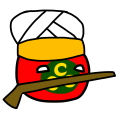 Ottoman is strongest!
 -
 Greek got independent
 -
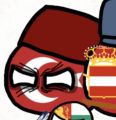 tired
tired -
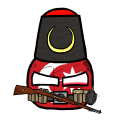 Will be used for Dissolution of the Ottoman Empire
 -
 By LB HD Mapper
 -
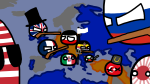
Ottoman Empire: Difference between revisions
From Heterodontosaurus Balls
| (179 intermediate revisions by 3 users not shown) | |||
| Line 1: | Line 1: | ||
{{ | {{Infobox | ||
|Name | |Name= {{I|OttomanL}} The Sublime Ottoman State {{I|OttomanG}}{{I|Ottoman}} | ||
| | |NativeName= {{ILSize|TurkishL-icon.png|Turkish Language}}: Yüce Osmanlı Devleti | ||
| | |founded= c. 1299 | ||
| | |predicon= RumSult | ||
| | |onlypredecessor= Sultanate of Rûm | ||
|ended= 1922 | |||
| | |nexticon= Turkey2 | ||
|onlysuccessor= Government of the Grand National Assembly | |||
| | |image= Ottoman Empire.png | ||
|Caption= I am the rebirth of Rome! | |||
|Alias= {{I|Ottoman}} Ottoman<br>{{I|IslamTheo}} [[Islamic Theocracy|Supreme Kebab]]<br>{{I|Turkey}} [[Turks|Turkish Empire]]<br>The Sick Man of Europe (later on) | |||
|Caption | |Time= c. 1299 – 3 March 1924 | ||
|Alias | |Government= {{I|AbMon}} [[Absolute Monarchism|Absolute Monarchy]] (1299-1876; 1878-1908; 1920-1922)<br>{{I|Caliphate}} [[Caliphalism|Caliphate]] (1517-1924)<br>{{I|Centralism}}{{I|Parliament}}{{I|ConMon}} [[Centralism|Unitary]] [[Parliamentarianism|Parliamentary]] [[Constitutional Monarchism|Constitutional Monarchy]] (1876-1878; 1908-1920)<br>{{I|Auth}}{{I|OneParty}}{{I|Stratocracy}} [[Authoritarianism|Under an Authoritarian]] [[One-Party System|One-Party]] [[Stratocracy|Military Dictatorship]] (1913-1918) | ||
| | |Languages= '''Official:'''<br>{{I|Ottoman Turkish}} [[Ottoman Turkish]] | ||
|Government | |Affiliation= | ||
|Languages | *{{I|Central Powers}} [[Central Powers]] | ||
|Affiliation | *{{i|AntiNapCo}} [[Anti-Napoleonic Coalition]] | ||
|Religions | **{{i|AntiNapCo}} [[Second Coalition]] (until 1801) | ||
*[[ | |Religions= | ||
*{{I|Islam}} [[Islam]] | |||
| | **{{I|Sunni}} [[Sunni Islam|Sunni]] (majority) | ||
| | |Founder= {{I|OsmanI}} [[Osman I Thought|Osman I]] (c. 1254/5-1323/4) | ||
|Likes | |Capital= {{I|Turkey}} [[Söğüt]] (c. 1299-1331)<br>{{I|Turkey}} [[İznik]] (1331-1335)<br>{{I|Bursa}} [[Bursa]] (1335-1360s)<br>{{I|Edirne}} [[Edirne]] (1360s-1453)<br>{{I|Istanbul}} [[Istanbul]] (1453-1922) | ||
|Dislikes | |Gender= Male | ||
|Preceded | |Friends= {{Scroll|{{i|Golden Horde}} [[Golden Horde]]<br>{{i|Crimean Khanate}} [[Crimean Khanate]]<br>{{i|EmpireJapan}} [[Empire of Japan]]<br>{{I|Swedish Empire}} [[Swedish Empire]]<br>{{I|German Empire}} [[German Empire]]<br>{{I|AH}} [[Austria-Hungary]]<br>{{i|Tsar Bulgaria}} [[Tsardom of Bulgaria]] (sometimes)}} | ||
|Succeeded | |Enemies= {{Scroll|{{I|Byzantine}} [[Byzantine Empire]]<br>{{I|Timurid Empire}} [[Timurid Empire]]<br>{{I|Serbian Empire}} [[Serbian Empire]]<br>{{I|Holy League}} [[Holy League]]<br>{{i|Mamluk}} [[Mamluk Sultanate]]<br>{{i|Austrian Empire}} [[Habsburg Monarchy|Habsburgs]]<br>{{i|Poland-Lithuania}} [[Polish-Lithuanian Commonwealth]]<br>{{i|First French Empire}} [[First French Empire]]<br>{{i|Kingdom of Greece}} [[Kingdom of Greece]]<br>{{i|Tsar Bulgaria}} [[Tsardom of Bulgaria]] (sometimes)<br>{{i|Emirate of Nejd and Hasa}} [[Emirate of Nejd and Hasa]]<br>{{i|Armenia}} [[First Republic of Armenia|Armenia]]<br>{{i|Australia}} [[Australia]]<br>{{i|New Zealand}} [[New Zealand]]<br>{{I|Russian Empire}} [[Russian Empire]]<br>{{i|French3}} [[French Third Republic]]<br>{{I|UK}} [[United Kingdom]]<br>{{I|Wallachia}} [[Wallachia|Vlad III]] {{I|VladIII}}}} | ||
}}The '''Ottoman Empire''' was a giant empire based in modern-day | |Likes= Kebab, halal, the {{i|Quran}} [[Quran]], {{I|Islam}} [[Islam]], the {{I|Caliphate}} [[Caliphalism|caliphate]], invading European lands, committing {{I|Genocide}} [[genocide]] (some), 1453, 1699, advanced weaponry like muskets and cannons, great succession battles | ||
|Dislikes= REST OF EUROPE, KEBAB REMOVERS, printing machines | |||
|Preceded= {{AL|{{I|RumSult}} [[Sultanate of Rûm]]<br>{{I|Byzantine}} [[Byzantine Empire]]}} | |||
|Succeeded= {{I|Turkey2}} [[Government of the Grand National Assembly]] | |||
|Food= *🥙 Kebab | |||
|themecolor= #d10b18 | |||
|textcolor= #ffffff | |||
}}{{Quote|The ink of a {{I|Intellectualism}} [[Intellectualism|scholar]] is worth more than the blood of a {{I|Fideism}} [[Fideism|martyr]].|{{i|MehmedII}} [[Mehmed II Thought|Mehmed II]]}}The '''Ottoman Empire''' was a giant {{I|Turkey}} [[Turks|Turkish]] {{I|Sunni}} [[Sunni Islam|Sunni Muslim]] {{I|Imp}} [[Imperialism|empire]] based in modern-day {{I|Turkey}} [[Türkiye]]. For centuries, he was once the boogeyman of {{I|ChrTheo}} [[Christian Theocracy|Christian Europe]], feared for good reasons. Ottoman was also one of few empires to spread across three continents being {{I|Asia}} [[Asia]], {{I|Europe}} [[Europe]], and {{I|Africa}} [[Africa]]. | |||
1299 is often given as the birth date of Ottoman, however this is mostly just symbolic. Before 1918, he had clay in the {{I|Arab}} [[Arabian Peninsula]], {{I|Africa}} [[North Africa]], the {{I|Yugoslavia}} [[Balkans]], {{I|Turkey}} [[Anatolia]], and around the {{I|Black Sea}} [[Black Sea]]. He died in 1922 and was replaced by his less competent successor, {{I|Turkey}} [[Türkiye]]. | |||
Ottoman also claims to be the rebirth of {{I|Roman Empire}} [[Roman Empire|Rome]]. | |||
==History== | |||
===Beginnings & Rise=== | |||
''<blockquote>Main article: {{i|OttomanL}} [[Ottoman Beylik]]</blockquote>'' | |||
The Ottoman Empire originated as a small {{I|OTS}} [[Turks|Turkic]] beylik (principality) in {{I|2ball}} [[Anatolia]] following the fragmentation of the {{I|Seljuk}} [[Seljuk Turks|Seljuk]] {{I|RumSult}} [[Sultanate of Rûm]] due to {{I|MongolEmp}} [[Mongol Empire|Mongol]] invasions. The {{I|OttomanL}} [[Ottoman Beylik|Beylik]] was founded by {{I|OsmanI}} [[Osman I Thought|Osman I]] around 1299, from whom Ottoman takes his name from. Ottoman then proceeded to {{I|Imp}} [[Imperialism|ally and annex]] several neighbouring beyliks. | |||
Ottoman Beylik began expanding westward. He expanded into the {{I|Yugoslavia}} [[Balkans]], fighting the {{I|Serbian Empire}} [[Serbian Empire|Serbian]] and {{I|Byzantine}} [[Byzantine Empire|Byzantine]] Empires over territorial disputes. Ottoman took advantage of Byzantine internal conflicts in the 1340s to control areas, which strained relations with the latter. He conquered the {{I|Karasid}} [[Karasid Beylik|Karasids]] in 1361, and capturing their navy. | |||
After securing his position in Anatolia, Ottoman conquered even more beyliks. The {{I|Timurid Empire}} [[Timurid Empire]], feeling threatened, declared {{I|War}} [[war]] on Ottoman in 1402, beating him to a pulp and capturing his Sultan {{i|Imp}} [[Imperialism|Bayezid I]]. This power vacuum sparked a 12-year civil war known as the "Fetret Devri". After the civil war, Ottoman slowly regained strength, re-conquering small independent beyliks in Anatolia and focusing on internal consolidation. | |||
===A New Power: Expansion & Peak=== | |||
''<blockquote>Main article: {{i|OttomanG}} [[Classical Age of the Ottoman Empire]]</blockquote>'' | |||
By the 15th century, Ottoman had rebuilt all his strength lost in the civil war. He besieged {{I|Constantinople}} [[Constantinople]], the {{I|Byzantine}} [[Byzantine Empire|Byzantine]]'s last stronghold, for nearly two months in 1453 before breaching the city's formidable walls using advanced cannons and strategic tactics. The {{I|Fall of Constantinople}} [[Ottoman Beylik#Fall of Constantinople|Fall of Constantinople]] was a turning point in {{I|History}} [[history]], the {{I|Islam}} [[Islam|Muslim]] Ottoman replaced {{I|Christi}} [[Christianity|Christian]] Byzantine as the regional power. The fall also symbolized the transition from the medieval to the modern era. Ottoman Empire replaced the fallen city with {{I|Istanbul}} [[Istanbul]], which became his new capital, which made Ottoman {{I|Imp}} [[Imperialism|expansion]] into {{I|Europe}} [[Europe]] easier. | |||
In the 15th and 16th centuries, the Ottoman Empire entered a {{i|OttomanG}} [[Classical Age of the Ottoman Empire|period of expansion]]. The Empire prospered under the rule of a line of committed and effective Sultans. Ottoman flourished {{i|Economy}} [[Economy|economically]] due to his control of the major overland trade routes between {{I|Europe}} [[Europe]] and {{I|Asia}} [[Asia]]. | |||
The Ottoman Empire first annexed {{I|Serbian Despotate}} [[Serbian Despotate|Serbia]] in 1459, followed by the conquest of {{I|Kingdom of Bosnia}} [[Kingdom of Bosnia|Bosnia]] in 1463. He then secured the vassalage of {{I|Wallachia}} [[Wallachia]] (formally under Ottoman {{I|Puppet}} [[Puppet Dictatorship|suzerainty]] by the late 15th century), {{I|Moldavia}} [[Moldavia]] (accepted suzerainty in 1538), and the {{I|Crimean Khanate}} [[Crimean Khanate]] (became vassal in 1475). After conquering the {{I|Mamluk}} [[Mamluk Sultanate]] in 1516-1517, Ottoman Empire's power in the eastern {{I|Water}} [[Mediterranean Sea|Mediterranean]] and {{I|4ballME}} [[Middle East]] became dominant. The Empire also expanded into North Africa during the early 16th century, bringing much of the region under his control, and dealt a devastating blow to the {{I|KOHungary1000}} [[Kingdom of Hungary|Hungary]] at the Battle of {{i|Mohacs}} [[Mohács]] in 1526, leaving Hungary largely partitioned and weakened. However, Ottoman began stagnating after conquering Hungary in 1541, but he still kept shadowing the entire Europe through his sheer size, {{I|Science}} [[science]], {{I|Economy}} [[economy]] and feared {{I|Militarism}} [[Militarism|military]] might. | |||
In the 16th century, Ottoman fought against {{I|Spanish Empire}} [[Spanish Empire]] in the Mediterranean and used {{I|Hydrarchy}} [[Barbary Corsairs]] to capture thousands of merchant ships, raiding coastal towns in Europe, {{I|Slavery}} [[Slavery|enslaving]] the people they captured. During the 1600s, the {{I|Earth}} [[Earth|world]] conflict between the {{I|OttomanG}} [[Classical Age of the Ottoman Empire|Ottoman Caliphate]] and {{I|Spanish Empire}} [[Iberian Union]] was a stalemate since both were at similar population, {{I|Technocracy}} [[Technocracy|technology]] and economic levels. | |||
===Stagnation=== | |||
After Sultan {{I|SuleimanI}} [[Suleiman the Magnificent Thought|Suleiman the Magnificent]] died in 1566 during his last campaign, Ottoman Empire entered a long era of stagnation and gradual decline. Weak sultans preferred the {{I|Hedonism}} [[Hedonism|palace]] and {{I|Sexocracy}} [[Sexocracy|harem]] over {{I|Militarism}} [[Militarism|leading armies]], while the {{I|Matriarchy}} [[Sultanate of Women]] let mothers, wives, and grand viziers pull the strings. The once-elite {{i|Militarism}} [[Janissary|Janissaries]] became {{I|Klep}} [[Kleptocracy|corrupt]], rebellious, and more interested in {{I|Politics}} [[politics]] than fighting, demanding pay raises and starting frequent revolts. Inflation hit hard from {{I|3ball}} [[Americas|New World]] {{I|Silver}} [[silver]] flooding in, wrecking the old {{I|Economy}} [[economy]], yet Ottoman kept holding most of his massive clay. He still clashed with {{I|Austrian Empire}} [[Habsburg Monarchy|Habsburg]] in the Long Turkish War (1593-1606) and {{I|Safavid}} [[Safavid Iran|Safavid]] over {{I|4ballME}} [[Mesopotamia]], rebuilt his {{I|Ottoman Navy}} [[Ottoman Navy|fleet]] after the 1571 Battle of {{I|Greece}} [[Nafpaktos|Lepanto]] disaster, and even grabbed {{I|Cretan State}} [[Kingdom of Candia|Crete]] from {{I|RoVenice}} [[Republic of Venice|Venetian]] in 1669 under the capable {{I|Albanian}} [[Köprülü Family|Köprülü]] viziers. But the golden age vibes were gone—everyone sensed the empire was starting to rot from the inside. | |||
The real humiliation came in 1683 with the fail of the Second Siege of {{I|Vienna}} [[Vienna]]. It was a military disaster to the Ottoman Empire as his supply lines were stretched and in unfamiliar territory with several incompetent commanders in charge. {{I|Poland-Lithuania}} [[Polish-Lithuanian Commonwealth|Poland-Lithuania]] arrived and turned the siege into a rout. What followed was the disasterious and humiliating Great Turkish War, where Polish-Lithuanian king {{I|Catholicism}} [[Catholicism|John III Sobieski]] led an unlikely alliance against the Ottomans and made a great charge against the unprepared siegers, breaking their line and sending them into a disarray. European players realized that the Ottomans was not so invincible, and {{i|ChrTheo}} [[Christian Theocracy|Christian nations]] joined together to expel {{i|IslamTheo}} [[Islamic Theocracy|Muslim]] influence from Europe. A {{I|Holy League}} [[Holy League]] was banded together in 1684, consisting of {{I|HRE}} [[Holy Roman Empire|Germany]], {{I|Austrian Empire}} [[Habsburg Monarchy|Austria]], {{I|Poland-Lithuania}} [[Polish-Lithuanian Commonwealth|Poland-Lithuania]], {{I|Tsardom of Russia}} [[Tsardom of Russia|Russia]], and {{I|RoVenice}} [[Republic of Venice|Venice]], smashing Ottomanball across the Balkans. | |||
The 1699 Treaty of {{I|Sremski Karlovci}} [[Sremski Karlovci|Karlowitz]] forced Ottoman to give up huge chunks of {{I|Hungary}} [[Ottoman Hungary|Hungary]] to {{i|Austrian Empire}} [[Habsburg Monarchy|Habsburg]], plus {{I|ByzEmp}} [[Rumelia Eyalet|Morea]] and other bits to his enemies—the first time Ottoman Empire ever had to sign a treaty as the clear loser. Europe stopped fearing the "Turkish menace", as they started realizing that the Ottoman Empire had been stagnating for some time while they themselves grew stronger thanks to the {{I|Colonialism}} [[Colonialism|colonization]] of the {{I|3ball}} [[Native Americans|New World]], including the perks of {{I|Industrialism}} [[Industrialism|Industrial Revolution]]. Ottoman began losing his territories one by one, and so started the long decline of Ottoman Empire. The Europeans began to call him the "Sick Man of Europe", supported rebels, sowing ideas of {{I|Separatism}} [[Separatism|independence]] and unjust treatment from Ottoman government. This led to many armed riots and insurrections, weakening the Ottoman Empire further. Ottoman was still giant on the map, but the unstoppable expansion era was dead. | |||
The 18th and early 19th centuries were basically nonstop losings for Ottoman. {{I|Tsardom of Russia}} [[Tsardom of Russia|Rus]][[Russian Empire|sia]] {{I|Russian Empire}} became the biggest nightmare, winning multiple Russo-Turkish Wars and forcing the disastrous Treaty of Küçük Kaynarca in 1774 after the 1768-1774 war, giving major concessions to Russia and let Russia meddle in Ottoman {{I|Christi}} [[Christianity|Christian]] affairs and eventually take {{I|Crimean Khanate}} [[Crimean Khanate|Crimea]] in 1783. | |||
From 1718 there was a short party phase called the {{I|Pacifism}} [[Tulip Period]] with fancy gardens, European vibes, and a tulip craze among the Ottoman court, but ended in rebellion and forced abdication of the sultan in 1730. By the 1800s, {{I|Nationalism}} [[nationalism]] exploded: {{I|Revolutionary Serbia}} [[Revolutionary Serbia|Serbia]] rebelled in 1804 and got autonomy, then the {{I|Greece}} [[Greeks|Greek]] launched a big independence war in 1821. Ottoman called in {{I|Ottoman Egypt}} [[Ottoman Egypt|Egypt]] for help, who crushed Greek forces on land. | |||
Ottoman's sultan {{I|Reformism}} [[Reformism|Mahmud II]] was pissed and decided it was time for big changes. In 1826, he'd already wiped out the {{I|Klep}} [[Kleptocracy|corrupt]] {{i|Militarism}} [[Janissary|Janissaries]] in the "Auspicious Incident," replacing them with a modern army in reforms known as "Nizam-i Cedid". | |||
Despite the initial success on land, in 1827 the combined fleets of {{I|UKGBI}} [[United Kingdom of Great Britain and Ireland|UK]], {{I|Bourbon Restoration}} [[Bourbon Restoration|France]], and {{I|Russian Empire}} [[Russian Empire|Russia]] annihilated the {{I|Ottoman Navy}} [[Ottoman Navy|Ottoman-Egyptian navy]] at the Battle of {{I|Pylos}} [[Pylos|Navarino]]. Greek was pretty much guaranteed freedom, the Balkans were cracking apart, and Ottoman Empire's painful slide into the "sick man" stereotype was locked in for the rest of the century. | |||
===Decline=== | |||
Things got worse with the Russo-Turkish War of 1828-1829, where Russia steamrolled Ottoman's armies, forcing the Treaty of {{I|AncGreece}} [[Orestias|Adrianople]] in 1829. This gave {{I|Russian Empire}} [[Russian Empire|Russia]] even more clay in the Caucasus, navigation rights through straits, and basically rubber-stamped {{I|Greece}} [[Greeks|Greek]] autonomy. In 1830, {{I|Kingdom of Greece}} [[Kingdom of Greece|Greece]] got his {{I|Separatism}} [[Separatism|independence]]. In 1876, there was a famine in {{I|Ottoman Bosnia}} [[Ottoman Bosnia and Herzegovina|Bosnia]] which worsened the situation there. As a result and as a sign of defiance, Bosnia stopped paying his {{I|Regulationism}} [[Regulationism|taxes]] and Ottoman grew more broke. Because of this and seeing the others successfully defy the Ottoman Empire, the Balkan regions started to break away from Ottoman's control with the support of other European players. | |||
Ottoman pushed for more {{I|Reformism}} [[Reformism|reforms]], but his biggest headache was his own vassal, {{I|Ottoman Egypt}} [[Ottoman Egypt|Egypt]], who wanted more power and invaded {{I|Ottoman}} [[Ottoman Syria|Syria]] in 1831. Ottoman begged Russia for help, leading to the Treaty of Hünkâr İskelesi in 1833, which made Russia his "protector" (more like a big brother with ulterior motives). But Europe freaked out, and in 1840, {{I|UKGBI}} [[United Kingdom of Great Britain and Ireland|Britain]], {{I|Austrian Empire}} [[Austrian Empire|Austria]], {{I|Prussia}} [[Prussia]], {{I|Russian Empire}} [[Russian Empire|Russia]], and Ottoman ganged up in the Convention of {{I|London}} [[London]] to put Egypt back in his place, giving him hereditary rule there but clipping his wings. Ottoman survived, but it showed how weak he was—now relying on Europeans to sort his internal messes. | |||
The Ottoman began a reformist era in what's known as the {{I|Secularism}} [[Tanzimat]] period (1839-1876); he replaced {{I|IslamTheo}} [[Islamic Theocracy|religous law]] with {{I|Secularism}} [[Secularism|secular law]] and decriminalized {{I|Homosex}} [[homosexuality]]. | |||
The {{I|Crimea}} [[Crimea|Crimean]] War (1853-1856) was part of a long-running contest between the major European powers for influence over territories of the declining Ottoman Empire; {{I|French4}} [[Second French Empire|France]], {{I|UK}} [[United Kingdom of Great Britain and Ireland|United Kingdom]], and {{I|KoItaly}} [[Kingdom of Sardinia|Sardinia]] allying themselves with Ottoman to fight against {{I|Russian Empire}} [[Russian Empire|Russia]]. The financial burden of the {{I|War}} [[war]] led the Ottoman state to issue foreign loans amounting to 5 million pounds sterling on 4 August 1854. The war caused an exodus of the {{i|Crimean Tatars}} [[Crimean Tatars]], about 200,000 of whom moved to the Ottoman Empire in continuing waves of emigration. Crimean Tatar refugees in the late 19th century played an especially notable role in seeking to modernize Ottoman education and in first promoting both {{I|OTS}} [[Pan-Turkism]] and a sense of Turkish {{I|Nationalism}} [[nationalism]]. | |||
In this period, Ottoman Empire spent only small amounts of public funds on education; for example, in 1860-1861 only 0.2% of the total budget was invested in education. As Ottoman attempted to modernize his {{I|Industrialism}} [[Industrialism|infrastructure]] and {{I|Militarism}} [[Militarism|army]] in response to {{I|Imp}} [[Imperialism|outside threats]], he opened himself up to a different kind of threat: that of {{I|Financialism}} [[Financialism|creditors]]. The single greatest threat to the independence of the Middle East in the 19th century was not the armies of the Europeans but their banks. The Ottoman state, who had begun taking on debt with the Crimean War, was forced to declare bankruptcy in 1875. By 1881, Ottoman Empire agreed to have his debt controlled by the {{I|Financialism}} [[Ottoman Public Debt Administration]], a council of European men with presidency alternating between France and Britain. The body controlled swaths of the Ottoman {{I|Economy}} [[economy]], often to the detriment of local Ottoman interests. | |||
The {{I|Yugoslavia}} [[Balkans]] held a strong grudge against the Ottoman Empire because him started imposing discriminatory laws. Ottoman became increasingly {{I|Auth}} [[Authoritarianism|oppressive]], favoring {{I|Islam}} [[Islam|Muslims]] even more over minorities, which led to the suppression of minority beliefs and {{I|Culture}} [[Culture|cultural]] practices. This oppression also hindered {{I|Scientocracy}} [[Scientocracy|scientific progress]], making the Ottoman Empire fall behind the {{I|Europe}} [[Indo-Europeans|Europeans]] in the {{I|Industrialism}} [[Industrialism|Industrial Revolution]]. These dark times when the {{I|Elitism}} [[Elitism|elite]] Muslim Turks started oppressing the others: it is something many modern {{I|Turkey}} [[Türkiye|Turks]] do not know much about due to their purposeful ignorance or lack of awareness. Some prefer to see themselves as the victims, some are even in denial. After long times of oppression and some nudges from European players, these regions continued to {{I|Separatism}} [[Separatism|break away]]. | |||
The Ottoman bashi-bazouks (disorderly soldiers) suppressed the {{i|BRCC}} [[Bulgarian Revolutionary Central Committee|Bulgarian]] uprising of 1876, massacring up to 100,000 people in the process. The Russo-Turkish War from 1877-1878 ended with a decisive victory for Russia, and as a result, Ottoman holdings in Europe declined sharply: {{i|Bulgaria}} [[Principality of Bulgaria|Bulgaria]] was established as an independent principality inside the Ottoman Empire; {{i|United Principalities}} [[United Principalities of Moldavia and Wallachia|Romania]] achieved full independence; and {{I|KOSerbia}} [[Kingdom of Serbia|Serbia]] finally gained complete independence, but with smaller territories. In 1878, {{I|AH}} [[Austria-Hungary]] unilaterally occupied the Ottoman provinces of {{I|Ottoman}} [[Bosnia Vilayet|Bosnia-Herzegovina]] and {{i|Ottoman}} [[Sanjak of Novi Pazar|Novi Pazar]]. | |||
From 1894 to 1896, between 100,000 and 300,000 {{I|Armenia}} [[Armenians]] living throughout the empire were killed in what became known as the {{I|EthNat}} [[Ethnonationalism|Hamidian]] massacres. | |||
===Defeat & Dissolution=== | |||
By the early 20th century, Ottoman Empire had significantly declined {{i|Culture}} [[Culture|culturally]], {{I|Social}} [[Society|socially]], and technologically. Minorities like {{I|Kurdistan}} [[Kurds]], {{I|Armenia}} [[Armenians]], {{I|Arabs}} [[Arabs]], {{I|Greece}} [[Greeks]], {{I|Serbs}} [[Serbs|Serbians]], {{i|Jew}} [[Jews]], and {{I|Christi}} [[Christianity|Christians]] were treated as second-class citizens or worse when compared to {{I|Turkey}} [[Turks|Turkish]] {{I|Islam}} [[Islam|Muslim]] citizens. This social situation had deteriorated over the past 150 years due to an increasingly {{I|Auth}} [[Authoritarianism|authoritarian]] government favouring Islam over others. | |||
The year was 1912 when the First Balkan War broke out, with the support of Great Powers in supplies, intel and weapons. It ended with Ottoman Empire losing almost all lands in the Balkans. A huge amount of {{I|Turkey}} [[Turks]] numbering in millions was deported by force from the {{I|Yugoslavia}} [[Balkans]] to {{I|Turkey}} [[Anatolia]]. | |||
In 1913, {{I|Tsar Bulgaria}} [[Tsardom of Bulgaria|Bulgaria]] wasn't happy with the land he gained in the First Balkan War. So, when the Great Powers drew new borders in the Balkans that Bulgaria didn't like, he started a new fight, the Second Balkan War, against {{I|KOSerbia}} [[Kingdom of Serbia|Serbia]] and {{I|Kingdom of Greece}} [[Kingdom of Greece|Greece]]. The Ottoman Empire used this opportunity to regain some territory and improve his reputation. | |||
Ottoman Empire was forced into the Great War in 1914 after a part of his {{I|Ottoman Navy}} [[Ottoman Navy|navy]] attacked the {{I|Russian Empire}} [[Russian Empire|Russian]] harbors under the command of a {{I|German Empire}} [[German Empire|German]] officer thus leading to Russia declaring {{I|War}} [[war]] and thereby his {{I|Entente}} [[Entente Powers|allies]] as well. It did not help that the {{I|British Empire}} [[British Empire]] had kept the caught battleships to himself, angering the Ottomans greatly. Ottoman got into the {{I|Central Powers}} [[Central Powers]] and tried to fight Russia in the {{I|2ball}} [[Caucasus]] but froze half to death. | |||
After years of decline, in 1915, Ottoman Empire was exhausted by his recent wars in the Balkans and a revolution where the {{I|Young Turks}} [[Young Turks]] took over. The Young Turks, despite being seen as forward-thinking, were guilty of terrible acts. They secretly ordered the deportation and {{I|Genocide}} [[Genocide|killings]] of {{I|Armenia}} [[Armenians]], leading to a tragic and bloody event known as the Armenian Genocide. Hundreds of thousands were forced from their homes and sent on a harrowing journey to modern-day {{I|FSA}} [[Syria]]. Many died from abuse, harsh weather, and starvation along the way, making it a journey of certain death for countless Armenians. | |||
In 1918, the {{I|Entente}} [[Entente Powers]] won WWI. Ottoman Empire was now up for partition, leading to a new {{I|Secularism}} [[Secularism|secular]] {{I|Turkey2}} [[Government of the Grand National Assembly|Turkish government]] to be formed to defend himself the partition, ending the Ottoman Empire in 1922. It was about time, too, the Ottomans had already ruled for over 600 years. | |||
==Relationships== | |||
===Friends=== | |||
*{{i|Golden Horde}} [[Golden Horde]] - A {{i|MongolEmp}} [[Mongol Empire|Mongol]] who helped me against {{i|Timurid Empire}} [[Timurid Empire|Timurid]]. He was the first {{i|Islam}} [[Islam|Muslim]] Mongol. | |||
*{{i|Crimean Khanate}} [[Crimean Khanate]] - Stupid {{i|Tsar}} [[Russian Empire|Russia]]! I miss you since I lost you… <s>AND YOU'LL BE MY CLAY!!!</s> | |||
*{{i|Swedish Empire}} [[Swedish Empire]] - Another ally that helped me in the Great Northern War. | |||
*{{i|EmpireJapan}} [[Empire of Japan]] - Another good friend that I took inspiration from. I'm you but in Europe! <s>Why side with {{i|Entente}} [[Entente Powers|them]]?</s> | |||
*{{i|German Empire}} [[German Empire]] - Ally during World War I and a good friend. Your kaiser inspired me later on to become {{i|Militarism}} [[Militarism|militarized]] and of very powerful. One day we will rule over {{I|Europe}} [[Europe]]! | |||
===Neutral=== | |||
*{{i|USA}} [[United States of America]] - …uhhh…who…uh… are you again? I-I can't remember. Well, we were fine until WWI. Then I cut relations. But thanks for not declaring {{I|War}} [[war]]. | |||
*{{i|Kingdom of France}} [[Kingdom of France]] - At least we both hate the {{i|Austrian Empire}} [[Habsburg Monarchy|Habsburgs]]… | |||
===Enemies=== | |||
*{{I|Byzantine}} [[Byzantine Empire]] - <small>I'm in your walls…</small> {{I|Fall of Constantinople}} [[Ottoman Beylik#Fall of Constantinople|1453]] was the best year of my life, roasted you on a stick like a kebab! But since I have obtained your clay, why not… take revenge on the {{I|Crusader}} [[Crusades|Crusaders]] together! | |||
*{{I|Timurid Empire}} [[Timurid Empire]] - The worst {{I|OTS}} [[Turks]], he defeated me in {{I|2ball}} [[Anatolia]] and kidnapped my {{I|IslamTheo}} [[Islamic Theocracy|Sultan]]. But, this won't be the case for long. | |||
*{{I|Holy League}} [[Holy League]] - These losers thought they could push me out of {{I|Europe}} [[Europe]], 1444 and 1453 worst year of your life, '''ALSO YOU CANNOT INTO {{I|Constantinople}} [[Constantinople|CONSTANTINOPLE]] ''ALHAMDULILAH!!!!''''' | |||
*{{i|Spanish Empire}} [[Spanish Empire]] - European {{i|Imp}} [[Imperialism|imperialist]] and {{i|Crusader}} [[Crusadism|crusader]], I attack you with {{I|Hydrarchy}} [[Hydrarchy|pirates]]! | |||
*{{i|Mamluk}} [[Mamluk Sultanate]] - Hahahahah, loser. 1517 worst year of your life, yuo thought the deserts could save yuo but they didn't. | |||
*{{i|Kingdom of Greece}} [[Kingdom of Greece]] - This a*shole keeps taking more and more land from me. He's the one that ruined everything by becoming an {{I|Separatism}} [[Separatism|independent]] Balkan first. YOU ARE THE BANE OF MY EXISTENCE. | |||
*{{i|Emirate of Nejd and Hasa}} [[Emirate of Nejd and Hasa]] - How dare you recapture {{i|Mecca}} [[Mecca]] and {{i|Saudi Arabia}} [[Medina]] and destroy my architecture in Al-Haram and Nabawi?!! | |||
*{{i|Armenia}} [[First Republic of Armenia|Armenia]] - Yuo is of Ottoman citizen but yuo is of helpings {{i|Russian Empire}} [[Russian Empire|Russia]]. TRAITOR!!! <s>It was actually me not having winter clothes in the Russian winter and not being capable enough to defeat the Russians.</s> REMOVE! <s>What {{I|Genocide}} [[genocide]]? Stop lying.</s> | |||
*{{i|Australia}} [[Australia]] & {{i|New Zealand}} [[New Zealand]] - YUO GUYS ARE OF SO ANNOYING! {{i|Gallipoli}} [[Gallipoli|GALLIPOLI]] IS BEAUTIFUL PLACE! 1915 BEST YEAR OF MY LIFE! 489,000 men wasted, wouldn't you think? | |||
==How to draw== | |||
{{Flag|Ottoman Empire-design.png|A flag of the Ottoman Empire}} | |||
{{DrawDif|easy}} | |||
#Draw a ball. | |||
#Fill it with red. | |||
#Draw a white crescent and eight-pointed star in the middle of the ball. | |||
#Add eyes and done! | |||
{{FlagColour | |||
|c1= Red | |||
|h1= #E40310 | |||
|c2= White | |||
|h2= #FFFFFF | |||
}} | |||
==Gallery== | |||
<tabber> | |||
|-|Regular= | |||
<gallery widths=150> | |||
Anti Napoleon balls.png|Napoelon! | |||
OttomanDrawing1.png|Ottoman is strongest! | |||
Ottoman loses Greece.png|Greek got independent | |||
OttomanTired.jpeg|tired | |||
Ottoman.png|Will be used for [[Dissolution of the Ottoman Empire]] | |||
Central Powers WW1.png|By [[User:LBMapper12|LB HD Mapper]] | |||
WWI Europe map.png | |||
</gallery> | |||
|-|Informational= | |||
<gallery widths=150> | |||
OttomanMapGreat.png|Ottoman Empire's Greatest Extent | |||
OttomanBigMap.png|Flag-Map of Ottoman Empire with all Tributary States (1668) | |||
</gallery></tabber> | |||
==See Also== | |||
*{{i|OttomanG}} [[Classical Age of the Ottoman Empire]] | |||
*{{i|OttomanL}} [[Ottoman Beylik]] | |||
[[Category:Characters]] | [[Category:Characters]] | ||
[[Category:Historical]] | |||
[[Category:Europe]] | |||
[[Category:Asia]] | |||
Latest revision as of 01:35, 24 June 2026
—  Mehmed II Mehmed II
|
The Ottoman Empire was a giant  Turkish
  Sunni Muslim
  empire based in modern-day Türkiye. For centuries, he was once the boogeyman of
  Christian Europe, feared for good reasons. Ottoman was also one of few empires to spread across three continents being
  Asia,
Asia,  Europe, and
  Africa.
1299 is often given as the birth date of Ottoman, however this is mostly just symbolic. Before 1918, he had clay in the  Arabian Peninsula, North Africa, the
  Balkans, Anatolia, and around the
  Black Sea. He died in 1922 and was replaced by his less competent successor, Türkiye.
Ottoman also claims to be the rebirth of  Rome.
Rome.
History
Beginnings & Rise
Main article:
Ottoman Beylik
The Ottoman Empire originated as a small  Turkic beylik (principality) in
  Anatolia following the fragmentation of the
  Seljuk
  Sultanate of Rûm due to
  Mongol invasions. The
  Beylik was founded by
  Osman I around 1299, from whom Ottoman takes his name from. Ottoman then proceeded to ally and annex several neighbouring beyliks.
Ottoman Beylik began expanding westward. He expanded into the Balkans, fighting the  Serbian and
  Byzantine Empires over territorial disputes. Ottoman took advantage of Byzantine internal conflicts in the 1340s to control areas, which strained relations with the latter. He conquered the
  Karasids in 1361, and capturing their navy.
After securing his position in Anatolia, Ottoman conquered even more beyliks. The  Timurid Empire, feeling threatened, declared
  war on Ottoman in 1402, beating him to a pulp and capturing his Sultan Bayezid I. This power vacuum sparked a 12-year civil war known as the "Fetret Devri". After the civil war, Ottoman slowly regained strength, re-conquering small independent beyliks in Anatolia and focusing on internal consolidation.
A New Power: Expansion & Peak
Main article:
Classical Age of the Ottoman Empire
By the 15th century, Ottoman had rebuilt all his strength lost in the civil war. He besieged  Constantinople, the Byzantine's last stronghold, for nearly two months in 1453 before breaching the city's formidable walls using advanced cannons and strategic tactics. The
  Fall of Constantinople was a turning point in
  history, the
  Muslim Ottoman replaced
  Christian Byzantine as the regional power. The fall also symbolized the transition from the medieval to the modern era. Ottoman Empire replaced the fallen city with
  Istanbul, which became his new capital, which made Ottoman expansion into Europe easier.
In the 15th and 16th centuries, the Ottoman Empire entered a  period of expansion. The Empire prospered under the rule of a line of committed and effective Sultans. Ottoman flourished
  economically due to his control of the major overland trade routes between Europe and Asia.
The Ottoman Empire first annexed  Serbia in 1459, followed by the conquest of
  Bosnia in 1463. He then secured the vassalage of
  Wallachia (formally under Ottoman
  suzerainty by the late 15th century),
  Moldavia (accepted suzerainty in 1538), and the
  Crimean Khanate (became vassal in 1475). After conquering the
  Mamluk Sultanate in 1516-1517, Ottoman Empire's power in the eastern
  Mediterranean and
  Middle East became dominant. The Empire also expanded into North Africa during the early 16th century, bringing much of the region under his control, and dealt a devastating blow to the
  Hungary at the Battle of
  Mohács in 1526, leaving Hungary largely partitioned and weakened. However, Ottoman began stagnating after conquering Hungary in 1541, but he still kept shadowing the entire Europe through his sheer size,
  science, economy and feared
  military might.
In the 16th century, Ottoman fought against  Spanish Empire in the Mediterranean and used
  Barbary Corsairs to capture thousands of merchant ships, raiding coastal towns in Europe,
  enslaving the people they captured. During the 1600s, the
  world conflict between the Ottoman Caliphate and Iberian Union was a stalemate since both were at similar population,
  technology and economic levels.
Stagnation
After Sultan  Suleiman the Magnificent died in 1566 during his last campaign, Ottoman Empire entered a long era of stagnation and gradual decline. Weak sultans preferred the
  palace and
  harem over leading armies, while the
  Sultanate of Women let mothers, wives, and grand viziers pull the strings. The once-elite Janissaries became
  corrupt, rebellious, and more interested in
  politics than fighting, demanding pay raises and starting frequent revolts. Inflation hit hard from
  New World
  silver flooding in, wrecking the old economy, yet Ottoman kept holding most of his massive clay. He still clashed with
  Habsburg in the Long Turkish War (1593-1606) and
  Safavid over Mesopotamia, rebuilt his
  fleet after the 1571 Battle of
  Lepanto disaster, and even grabbed
  Crete from
  Venetian in 1669 under the capable
  Köprülü viziers. But the golden age vibes were gone—everyone sensed the empire was starting to rot from the inside.
The real humiliation came in 1683 with the fail of the Second Siege of  Vienna. It was a military disaster to the Ottoman Empire as his supply lines were stretched and in unfamiliar territory with several incompetent commanders in charge.
  Poland-Lithuania arrived and turned the siege into a rout. What followed was the disasterious and humiliating Great Turkish War, where Polish-Lithuanian king
  John III Sobieski led an unlikely alliance against the Ottomans and made a great charge against the unprepared siegers, breaking their line and sending them into a disarray. European players realized that the Ottomans was not so invincible, and Christian nations joined together to expel
  Muslim influence from Europe. A
  Holy League was banded together in 1684, consisting of
  Germany, Austria, Poland-Lithuania,
  Russia, and Venice, smashing Ottomanball across the Balkans.
The 1699 Treaty of  Karlowitz forced Ottoman to give up huge chunks of
  Hungary to Habsburg, plus
  Morea and other bits to his enemies—the first time Ottoman Empire ever had to sign a treaty as the clear loser. Europe stopped fearing the "Turkish menace", as they started realizing that the Ottoman Empire had been stagnating for some time while they themselves grew stronger thanks to the
  colonization of the New World, including the perks of
  Industrial Revolution. Ottoman began losing his territories one by one, and so started the long decline of Ottoman Empire. The Europeans began to call him the "Sick Man of Europe", supported rebels, sowing ideas of
  independence and unjust treatment from Ottoman government. This led to many armed riots and insurrections, weakening the Ottoman Empire further. Ottoman was still giant on the map, but the unstoppable expansion era was dead.
The 18th and early 19th centuries were basically nonstop losings for Ottoman. Russia  became the biggest nightmare, winning multiple Russo-Turkish Wars and forcing the disastrous Treaty of Küçük Kaynarca in 1774 after the 1768-1774 war, giving major concessions to Russia and let Russia meddle in Ottoman Christian affairs and eventually take Crimea in 1783.
From 1718 there was a short party phase called the  Tulip Period with fancy gardens, European vibes, and a tulip craze among the Ottoman court, but ended in rebellion and forced abdication of the sultan in 1730. By the 1800s,
  nationalism exploded:
  Serbia rebelled in 1804 and got autonomy, then the Greek launched a big independence war in 1821. Ottoman called in
  Egypt for help, who crushed Greek forces on land.
Ottoman's sultan  Mahmud II was pissed and decided it was time for big changes. In 1826, he'd already wiped out the corrupt Janissaries in the "Auspicious Incident," replacing them with a modern army in reforms known as "Nizam-i Cedid".
Despite the initial success on land, in 1827 the combined fleets of  UK,
UK,  France, and Russia annihilated the Ottoman-Egyptian navy at the Battle of
  Navarino. Greek was pretty much guaranteed freedom, the Balkans were cracking apart, and Ottoman Empire's painful slide into the "sick man" stereotype was locked in for the rest of the century.
Decline
Things got worse with the Russo-Turkish War of 1828-1829, where Russia steamrolled Ottoman's armies, forcing the Treaty of  Adrianople in 1829. This gave Russia even more clay in the Caucasus, navigation rights through straits, and basically rubber-stamped Greek autonomy. In 1830,
  Greece got his independence. In 1876, there was a famine in
  Bosnia which worsened the situation there. As a result and as a sign of defiance, Bosnia stopped paying his
  taxes and Ottoman grew more broke. Because of this and seeing the others successfully defy the Ottoman Empire, the Balkan regions started to break away from Ottoman's control with the support of other European players.
Ottoman pushed for more reforms, but his biggest headache was his own vassal, Egypt, who wanted more power and invaded  Syria in 1831. Ottoman begged Russia for help, leading to the Treaty of Hünkâr İskelesi in 1833, which made Russia his "protector" (more like a big brother with ulterior motives). But Europe freaked out, and in 1840, Britain, Austria,
  Prussia, Russia, and Ottoman ganged up in the Convention of
  London to put Egypt back in his place, giving him hereditary rule there but clipping his wings. Ottoman survived, but it showed how weak he was—now relying on Europeans to sort his internal messes.
The Ottoman began a reformist era in what's known as the  Tanzimat period (1839-1876); he replaced religous law with secular law and decriminalized
  homosexuality.
The  Crimean War (1853-1856) was part of a long-running contest between the major European powers for influence over territories of the declining Ottoman Empire;
  France,
  United Kingdom, and
  Sardinia allying themselves with Ottoman to fight against Russia. The financial burden of the war led the Ottoman state to issue foreign loans amounting to 5 million pounds sterling on 4 August 1854. The war caused an exodus of the
  Crimean Tatars, about 200,000 of whom moved to the Ottoman Empire in continuing waves of emigration. Crimean Tatar refugees in the late 19th century played an especially notable role in seeking to modernize Ottoman education and in first promoting both Pan-Turkism and a sense of Turkish nationalism.
In this period, Ottoman Empire spent only small amounts of public funds on education; for example, in 1860-1861 only 0.2% of the total budget was invested in education. As Ottoman attempted to modernize his infrastructure and army in response to outside threats, he opened himself up to a different kind of threat: that of  creditors. The single greatest threat to the independence of the Middle East in the 19th century was not the armies of the Europeans but their banks. The Ottoman state, who had begun taking on debt with the Crimean War, was forced to declare bankruptcy in 1875. By 1881, Ottoman Empire agreed to have his debt controlled by the Ottoman Public Debt Administration, a council of European men with presidency alternating between France and Britain. The body controlled swaths of the Ottoman economy, often to the detriment of local Ottoman interests.
The Balkans held a strong grudge against the Ottoman Empire because him started imposing discriminatory laws. Ottoman became increasingly  oppressive, favoring Muslims even more over minorities, which led to the suppression of minority beliefs and
  cultural practices. This oppression also hindered
  scientific progress, making the Ottoman Empire fall behind the Europeans in the Industrial Revolution. These dark times when the
  elite Muslim Turks started oppressing the others: it is something many modern Turks do not know much about due to their purposeful ignorance or lack of awareness. Some prefer to see themselves as the victims, some are even in denial. After long times of oppression and some nudges from European players, these regions continued to break away.
The Ottoman bashi-bazouks (disorderly soldiers) suppressed the  Bulgarian uprising of 1876, massacring up to 100,000 people in the process. The Russo-Turkish War from 1877-1878 ended with a decisive victory for Russia, and as a result, Ottoman holdings in Europe declined sharply:
  Bulgaria was established as an independent principality inside the Ottoman Empire;
  Romania achieved full independence; and
  Serbia finally gained complete independence, but with smaller territories. In 1878,
  Austria-Hungary unilaterally occupied the Ottoman provinces of Bosnia-Herzegovina and Novi Pazar.
From 1894 to 1896, between 100,000 and 300,000  Armenians living throughout the empire were killed in what became known as the
  Hamidian massacres.
Defeat & Dissolution
By the early 20th century, Ottoman Empire had significantly declined culturally,  socially, and technologically. Minorities like
  Kurds, Armenians,
  Arabs, Greeks,
  Serbians,
  Jews, and Christians were treated as second-class citizens or worse when compared to Turkish Muslim citizens. This social situation had deteriorated over the past 150 years due to an increasingly authoritarian government favouring Islam over others.
The year was 1912 when the First Balkan War broke out, with the support of Great Powers in supplies, intel and weapons. It ended with Ottoman Empire losing almost all lands in the Balkans. A huge amount of Turks numbering in millions was deported by force from the Balkans to Anatolia.
In 1913,  Bulgaria wasn't happy with the land he gained in the First Balkan War. So, when the Great Powers drew new borders in the Balkans that Bulgaria didn't like, he started a new fight, the Second Balkan War, against Serbia and Greece. The Ottoman Empire used this opportunity to regain some territory and improve his reputation.
Ottoman Empire was forced into the Great War in 1914 after a part of his navy attacked the Russian harbors under the command of a  German officer thus leading to Russia declaring war and thereby his
  allies as well. It did not help that the
  British Empire had kept the caught battleships to himself, angering the Ottomans greatly. Ottoman got into the
  Central Powers and tried to fight Russia in the Caucasus but froze half to death.
After years of decline, in 1915, Ottoman Empire was exhausted by his recent wars in the Balkans and a revolution where the  Young Turks took over. The Young Turks, despite being seen as forward-thinking, were guilty of terrible acts. They secretly ordered the deportation and
  killings of Armenians, leading to a tragic and bloody event known as the Armenian Genocide. Hundreds of thousands were forced from their homes and sent on a harrowing journey to modern-day
  Syria. Many died from abuse, harsh weather, and starvation along the way, making it a journey of certain death for countless Armenians.
In 1918, the Entente Powers won WWI. Ottoman Empire was now up for partition, leading to a new secular  Turkish government to be formed to defend himself the partition, ending the Ottoman Empire in 1922. It was about time, too, the Ottomans had already ruled for over 600 years.
Relationships
Friends
 Golden Horde - A
  Mongol who helped me against
  Timurid. He was the first
  Muslim Mongol.
 Crimean Khanate - Stupid
  Russia! I miss you since I lost you…
 AND YOU'LL BE MY CLAY!!! Swedish Empire - Another ally that helped me in the Great Northern War.
 Empire of Japan - Another good friend that I took inspiration from. I'm you but in Europe!
 Why side with them?
them? German Empire - Ally during World War I and a good friend. Your kaiser inspired me later on to become
  militarized and of very powerful. One day we will rule over
  Europe!
Neutral
 United States of America - …uhhh…who…uh… are you again? I-I can't remember. Well, we were fine until WWI. Then I cut relations. But thanks for not declaring
  war.
war. Kingdom of France - At least we both hate the
  Habsburgs…
Enemies
 Byzantine Empire - I'm in your walls…
  1453 was the best year of my life, roasted you on a stick like a kebab! But since I have obtained your clay, why not… take revenge on the
  Crusaders together!
- Timurid Empire - The worst
 Turks, he defeated me in
  Anatolia and kidnapped my
  Sultan. But, this won't be the case for long.
  Holy League - These losers thought they could push me out of Europe, 1444 and 1453 worst year of your life, ALSO YOU CANNOT INTO
  CONSTANTINOPLE ALHAMDULILAH!!!!
 Spanish Empire - European
  imperialist and crusader, I attack you with
  pirates!
 Mamluk Sultanate - Hahahahah, loser. 1517 worst year of your life, yuo thought the deserts could save yuo but they didn't.
 Kingdom of Greece - This a*shole keeps taking more and more land from me. He's the one that ruined everything by becoming an
  independent Balkan first. YOU ARE THE BANE OF MY EXISTENCE.
 Emirate of Nejd and Hasa - How dare you recapture
  Mecca and
  Medina and destroy my architecture in Al-Haram and Nabawi?!!
 Armenia - Yuo is of Ottoman citizen but yuo is of helpings
  Russia. TRAITOR!!!
 It was actually me not having winter clothes in the Russian winter and not being capable enough to defeat the Russians.REMOVE!What genocide? Stop lying.
 Australia &
  New Zealand - YUO GUYS ARE OF SO ANNOYING!
  GALLIPOLI IS BEAUTIFUL PLACE! 1915 BEST YEAR OF MY LIFE! 489,000 men wasted, wouldn't you think?
How to draw

Ottoman Empire has a drawing rating of easy.
- Draw a ball.
- Fill it with red.
- Draw a white crescent and eight-pointed star in the middle of the ball.
- Add eyes and done!
| Color Name | HEX | |
|---|---|---|
| Red | #E40310 | |
| White | #FFFFFF | |
Gallery


-
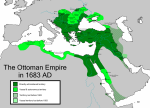 Ottoman Empire's Greatest Extent
 -
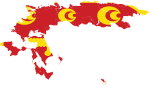 Flag-Map of Ottoman Empire with all Tributary States (1668)


